
How to Check Criminal History in Talladega County
Start with the record that answers the real question. A state court case search runs through Just One Look and the correct Talladega County clerk division. Current or recent county custody appears in the sheriff-linked roster. A person who wants a fingerprint-matched copy of his or her own Alabama history uses ALEA Form 46. Municipal cases stay with the city court, while state-prison and federal-custody questions use separate locators.
- Define the scope: court case, arrest report, booking, present custody, warrant, personal Alabama history, or registry entry.
- Search the matching official portal and use a case number or other strong identifier when one is known.
- Compare the court, dates, agency, charge, and custody status before treating a name result as a match.
- Call the correct clerk, sheriff, police, or municipal counter when the electronic result is absent or incomplete.
- Request the final order or certified record from the office that created it when an official document is needed.
These systems overlap, but none replaces all the others. A booking entry proves an intake event. It does not supply the prosecutor's final charge or the court's disposition. Likewise, a closed court case does not reveal every detail in a police narrative or every item on a fingerprint repository record.
Three Talladega Records, Three Answers
Talladega County criminal records are easiest to understand as three separate views. The sheriff roster is custody-centered, the court file is case-centered, and the ALEA history is identity-centered. Each is built by a different office at a different point in the justice process.
| Record | Best answer | Main limit |
|---|---|---|
| Sheriff roster | Current confinements, recent admits, releases, charges, and bond display | Not a full arrest history or finding of guilt |
| Court file | Filed charge, docket events, rulings, disposition, sentence, and costs | Not a fingerprint rap sheet or police narrative |
| ALEA Form 46 history | The requester's fingerprint-matched Alabama arrest cycles and reported outcomes | Personal review only through the documented public route |
A mismatch is not always an error. Charges can change after booking, and disposition reporting can lag. Compare the clerk's final order with the repository entry before starting a correction.
The order of the search also matters. A recent arrest may appear on the roster before the state court case is easy to locate. Once a prosecutor files the charge, the court docket becomes the better source for hearings, amended counts, and the final result. ALEA may receive the disposition later through agency reporting. Reading all three records as if they were created at the same moment can produce a false conflict.
Official Alabama Background Checks
The Alabama Law Enforcement Agency State Bureau of Investigation maintains the central repository. Alabama does not offer an unrestricted public statewide name search for general use. A person reviewing his or her own Alabama Criminal History Record Information completes Form 46, provides a current identification copy and classifiable fingerprints, signs before two witnesses or a notary, and pays by cashier's check or money order.
The base fee is $25, with each added copy costing $5. ALEA states that personal review takes at least four to five weeks after receipt. Fingerprints must be taken by an authorized law-enforcement agency with an FBI-issued ORI on an FD-258 card or approved AFIS printout. Local fingerprint availability and any separate capture fee should be confirmed before visiting.
| Product | Scope | Published fee |
|---|---|---|
| ALEA Form 46 | Requester's own Alabama repository history | $25; $5 per extra copy |
| Just One Look | Alabama trial-court cases | $9.99 search and one detail; other charges apply |
| FBI Identity History Summary | Requester's own FBI fingerprint summary | $18 plus optional capture or channeler cost |
The ALEA Criminal Records Identification Unit overview shows the state office behind this process.
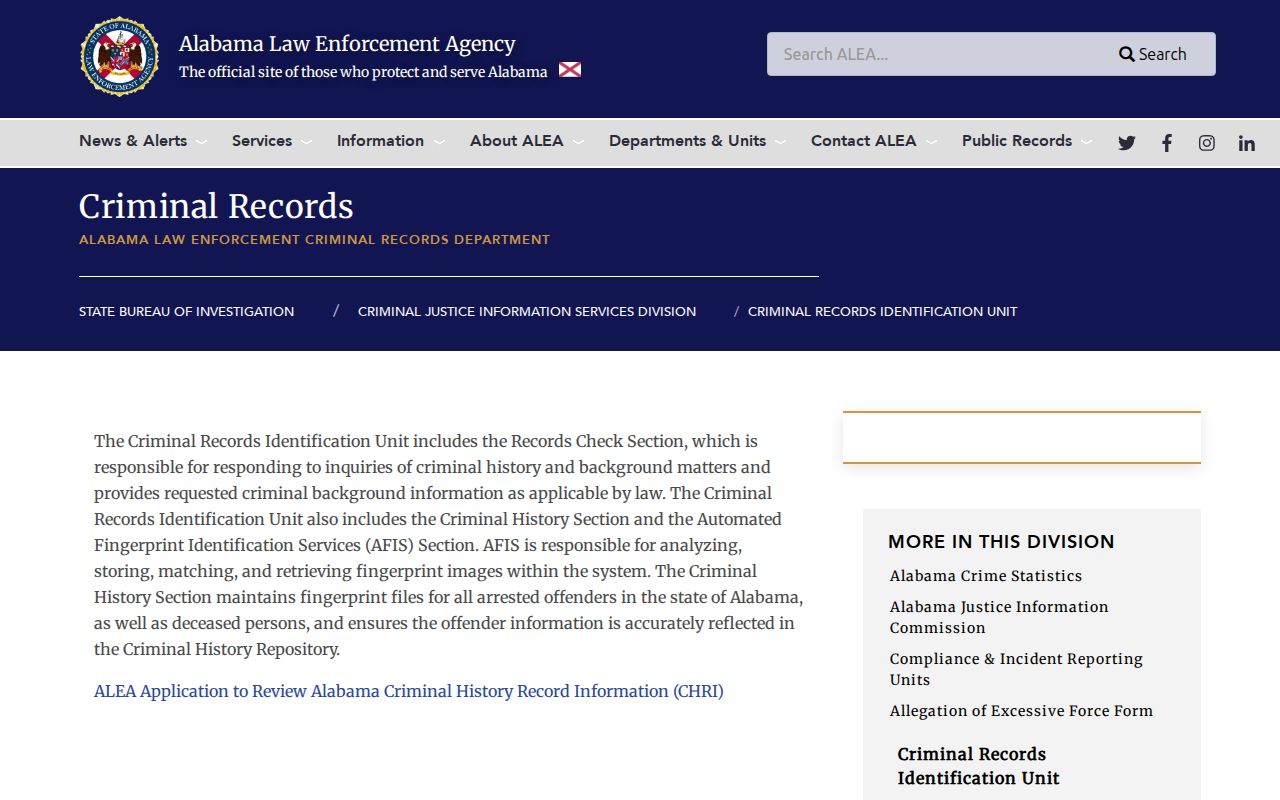
That agency page is the sound starting point for personal Alabama record review, rather than a commercial name-search product.
Talladega Criminal Record Form 46
A complete packet includes the signed application, identification copy, fingerprint card, and payment. It asks for the requester's full name, aliases, date of birth, address, identity details, contact numbers, and any authorized release recipient. Applicants either obtain two witness signatures or use the notary block. The law-enforcement fingerprint technician supplies the agency name, ORI, and contact information.
ALEA's personal background-check instructions explain the submission and payment rules.
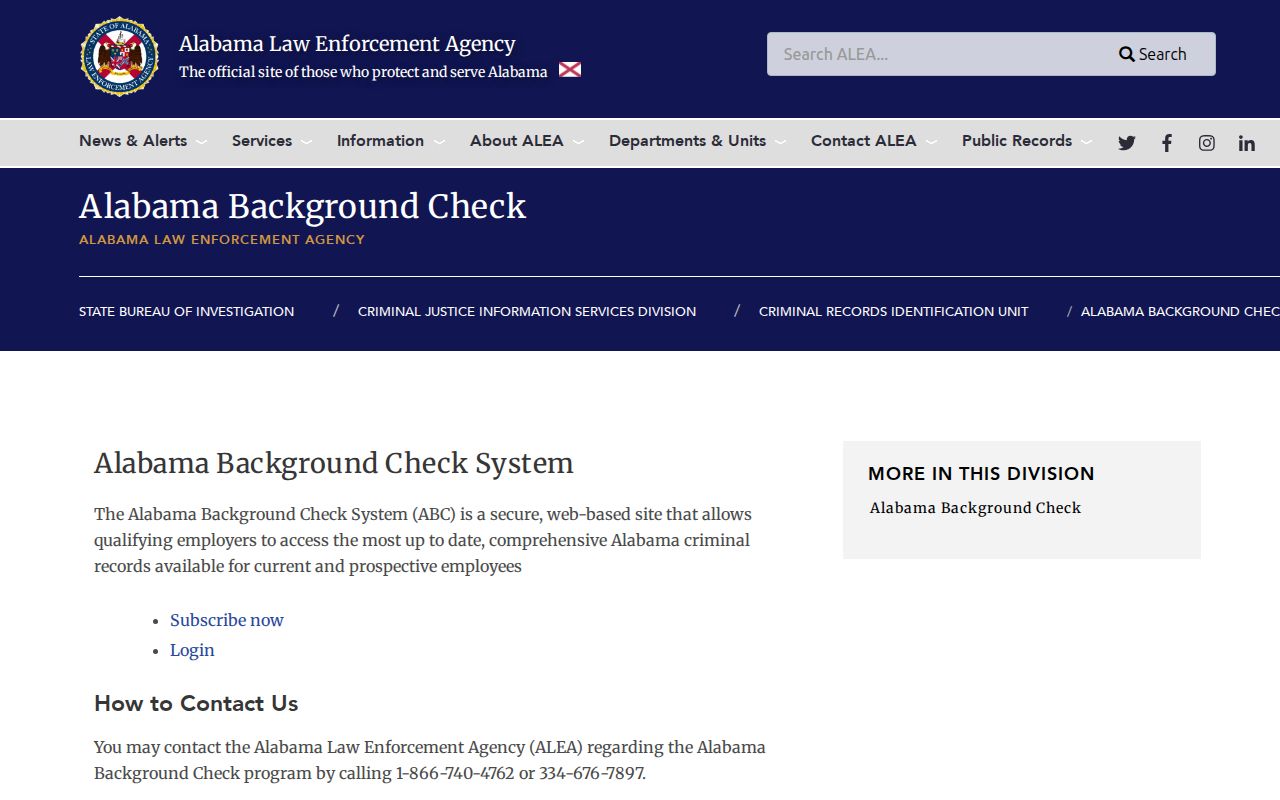
The instructions confirm why a Talladega County clerk search and an ALEA fingerprint review serve different purposes.
Types of Criminal Records
An incident report begins with the arresting agency. A jail booking record then documents intake, listed charges, bond, and custody events. Prosecutors may file a different charge, and the clerk opens a case-centered file. Courts later report dispositions to ALEA, which associates arrest cycles with fingerprints. Warrants, supervision files, registry entries, and custody locators add more layers.
- Disposition
- The court's outcome, such as conviction, dismissal, acquittal, or nolle prosequi.
- Nolle prosequi
- A formal choice by the prosecutor not to continue the charge at that time.
- Booking
- The jail intake record, which is separate from the filed court case.
- Probation
- Court-ordered community supervision in place of or after confinement.
- Parole
- Conditional community release from a prison term under state authority.
Police reports remain with the agency that wrote them. Municipal court cases can also remain outside the county circuit and district route. A broad Talladega County criminal history check therefore may need more than one request.
Two Talladega Criminal Records Counters
Talladega County divides public-facing court work between northern and southern locations. The Talladega Judicial Building at 148 East Street North holds circuit-criminal and Northern Division district-criminal staff. The Sylacauga Judicial Building at 400 North Norton Avenue holds Southern Division district-criminal, traffic, juvenile, and related desks. Both clerk counters publish weekday hours from 8:00 a.m. to 4:30 p.m.
Northern Division
148 East Street North
Talladega, AL 35160
Circuit Criminal: 256-761-2102
Northern District: 256-761-2104
Southern Division
400 North Norton Avenue
Sylacauga, AL 35150
Southern District: 256-245-4352
The historic courthouse square handles probate, tags, taxes, driver-license work, and county administration, not the circuit and district criminal counters. Calling the criminal desk first avoids a trip to the wrong building.
The direct extensions also depend on case level. Circuit Criminal lists extensions 1202, 1205, and 1206. Northern District Criminal lists extension 1210, while Southern District Criminal lists extension 2037. A caller with a case number should provide it and ask whether the public copy is at that counter, whether certification is available, and whether an older file has moved to storage. No official local page supplies a universal criminal-copy fee, so the current price should be confirmed before a request is mailed.
What a Talladega County Criminal Record Shows
The displayed fields depend on the record holder. A repository history is organized around identity and fingerprint-supported arrest cycles. A court file centers on a case number, pleadings, docket events, and outcome. A jail entry centers on custody. Restricted identifiers, juvenile records, Youthful Offender material, victim information, and sealed content may be removed from public view.
| Name and identifiers | Legal name, aliases, date of birth, descriptors, and state or FBI identifiers where held and lawfully shown. |
|---|---|
| Arrest and booking data | Arrest date, agency, intake charge, booking time, bond, and custody or release status. |
| Case data | Court, division, case number, filed charge, dates, settings, orders, and financial entries. |
| Disposition | The final result reported by the court, which should be read rather than inferred from an arrest. |
| Sentence | Confinement, probation, restitution, fines, and other terms when ordered and public. |
“Released” describes custody, not the fate of a charge. “Closed” means a court entered an outcome, not that the outcome was a conviction.
Inside Talladega County Booking Search
The sheriff-linked Southern Software Citizen Connect roster offers current confinements, last-day and last-seven-day admits, and admit or release date ranges of no more than 31 days. It also accepts first, middle, and last name, charge terms, and an arresting-agency choice. A booking card can show the arrest time, agency, booking date, demographics, bond total, charges, and release status.
The Talladega County Sheriff's Office links readers into its official record channels.

The sheriff's North and South contacts are also the fallback when a roster result does not answer a report or archived-booking question.
Current county custody is different from state prison. The ADOC Inmate Search uses an exact six-digit AIS number or a first and last name for current state prisoners.
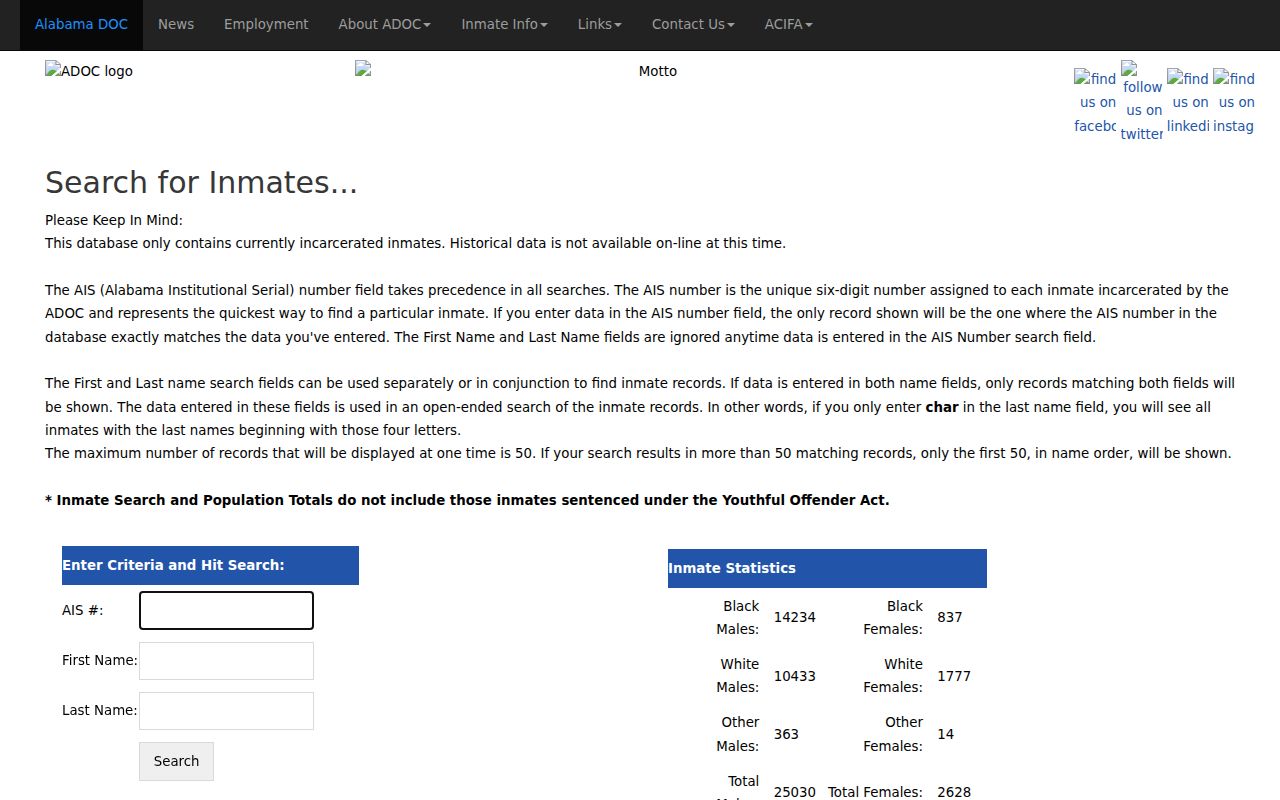
ADOC excludes online historical results and Youthful Offender cases, so an absent result does not answer every past-custody question.
Public Access Laws
Alabama law begins with public access to public writings, but that rule has limits. Court privacy rules protect confidential categories and identifiers. Repository criminal history has separate dissemination controls. Juvenile, expunged, sealed, victim, and investigative material may be restricted even when part of an adult docket remains open.
Key Alabama authorities:
Ala. Code §36-12-40 provides the general inspection rule for public writings, subject to lawful exceptions.
Court Record Privacy Rule 104 permits access unless law, rule, or order restricts the file.
Ala. Code §§41-9-590 et seq. controls state criminal-history dissemination.
Ala. Code §12-15-133 protects juvenile legal and social records.
The official Code of Alabama is the primary place to confirm current statutory text.
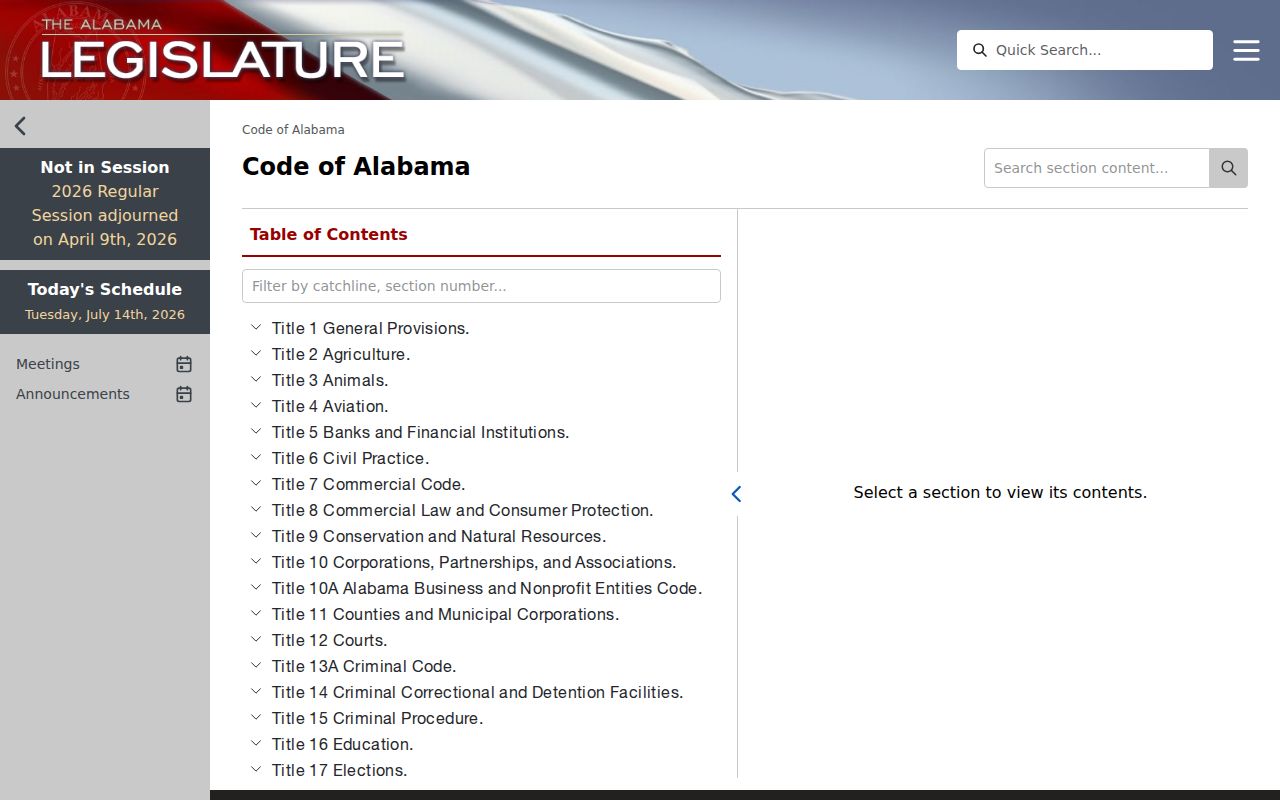
Remote access is not the same as complete access. The clerk or record holder applies the controlling rule to the requested material.
Talladega County Warrant Records
No public Talladega County sheriff warrant database was verified. The sheriff's Wanted Person tip category is a way to send investigative information, not a way to check warrant status, and the booking roster shows executed arrests rather than every active warrant. The county fallback is the Sheriff's North Office at 256-362-2748 and the court or magistrate that issued the process. A court docket may show a bench warrant, but sealed or unserved investigative warrants are not assumed to be public.
Talladega Municipal Court will not discuss warrants by telephone. Its published route is an in-person appearance at 255 West South Street with government photo identification during weekday business hours. Lincoln and Sylacauga have separate municipal channels. A person who discovers a possible warrant should seek legal advice before taking action and should not use the sheriff tip form as a records request.
The Talladega County AL Sheriff app supplements the official site with agency alerts, tips, crime reporting, and communication. It is available from the Apple App Store and Google Play. Store descriptions do not establish an app-only warrant or inmate lookup, so the documented roster and official telephone routes remain the record channels.
Correcting Talladega Criminal History
A person who finds a wrong or missing item should first obtain the ALEA history and identify the exact arrest cycle. Form 46 Appendix A must be used within one year of the review response. The challenge identifies the charge and date, the arresting agency or court, the disputed entry, the proposed correction, and the official proof supporting it. A certified final disposition from the Talladega County clerk can be vital when the repository lacks the outcome.
The FBI offers a separate personal Identity History Summary through its electronic Departmental Order portal.
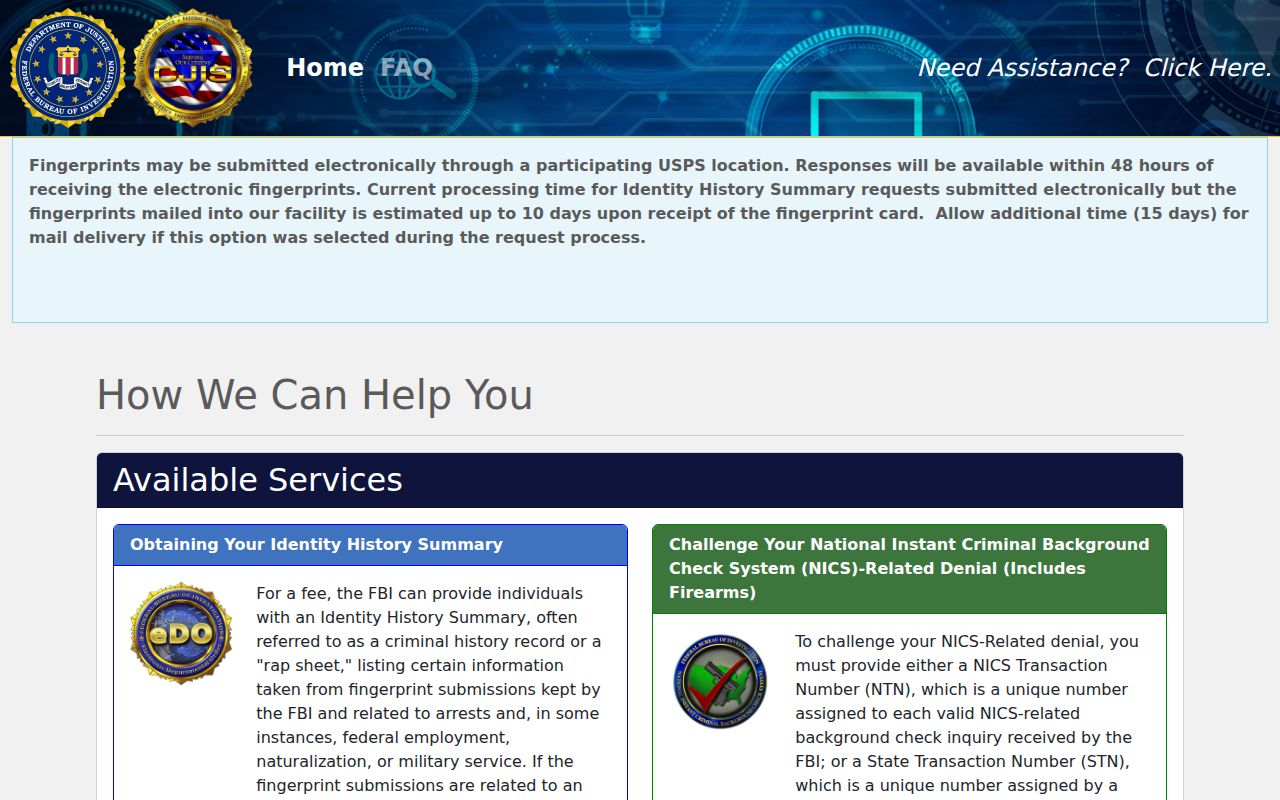
State-originated data is ordinarily corrected through the responsible state or submitting agency, while an FBI challenge addresses the federal summary.
Sealed, Expunged & Restricted
Alabama expungement is a court process under Title 15, Chapter 27. It is not a delete button on a booking search. A Talladega County petition is filed in Circuit Court where the charge was filed, using the statewide CR-65 Petition for Expungement of Records. The form lists a $500 filing fee, subject to an indigency decision.
Eligibility turns on the exact charge and outcome. Certain acquittals, no-bills, dismissals, nolle prosequi outcomes, completed diversion programs, qualifying convictions, and narrow pardoned-felony cases may fit different time and condition rules. The petitioner must serve the district attorney and each listed custodian. An omitted custodian may retain its record.
Juvenile and Youthful Offender records follow separate confidentiality rules. A pardon is also distinct from expungement. Anyone relying on a restriction should obtain the signed order and confirm how each named holder implemented it.
The form requires one charge per petition and a certified arrest record or disposition information, a certified ALEA history, the arresting and booking agencies, and service details for the district attorney and record custodians. Multiple qualifying charges from one arrest may use separate petitions with one fee, while separate arrests require separate fees. An expungement challenge is not the same as correcting inaccurate repository data through Form 46 Appendix A.
Talladega Police Records and Charges
An incident or arrest narrative stays with the agency that wrote it. Sheriff reports route to the North or South Office, while Talladega, Sylacauga, Lincoln, Childersburg, Munford, Talladega College, and AIDB records begin with their own departments. A court file is not a substitute for that police narrative. Alabama crash reports use a separate ALEA request, cost $15, and require details such as driver names, county, crash date, and location. Access is limited by Ala. Code §32-10-7.
The prosecuted class should be read from the filed or amended court charge, not assumed from a booking label. Ordinary Alabama ranges show why that distinction matters.
| Class | Ordinary custody range | Fine ceiling |
|---|---|---|
| Class A felony | 10 years to life, or 99 years | $60,000 |
| Class B felony | 2 to 20 years | $30,000 |
| Class C felony | 1 year and 1 day to 10 years | $15,000 |
| Class D felony | 1 year and 1 day to 5 years | $7,500 |
| Class A misdemeanor | Up to 1 year | $6,000 |
| Class B misdemeanor | Up to 6 months | $3,000 |
| Class C misdemeanor | Up to 3 months | $500 |
Weapon, sex-offense, and habitual-felony provisions can alter the base range. The final case record controls the actual conviction and sentence.
Talladega Criminal Custody Records
FCI Talladega creates a third custody layer within the county. A person in federal custody will not appear merely because the county roster and ADOC search were checked. Federal Bureau of Prisons records use register or other federal numbers, or name, race, age, and sex fields.
The BOP Inmate Locator covers federal inmates from 1982 onward.
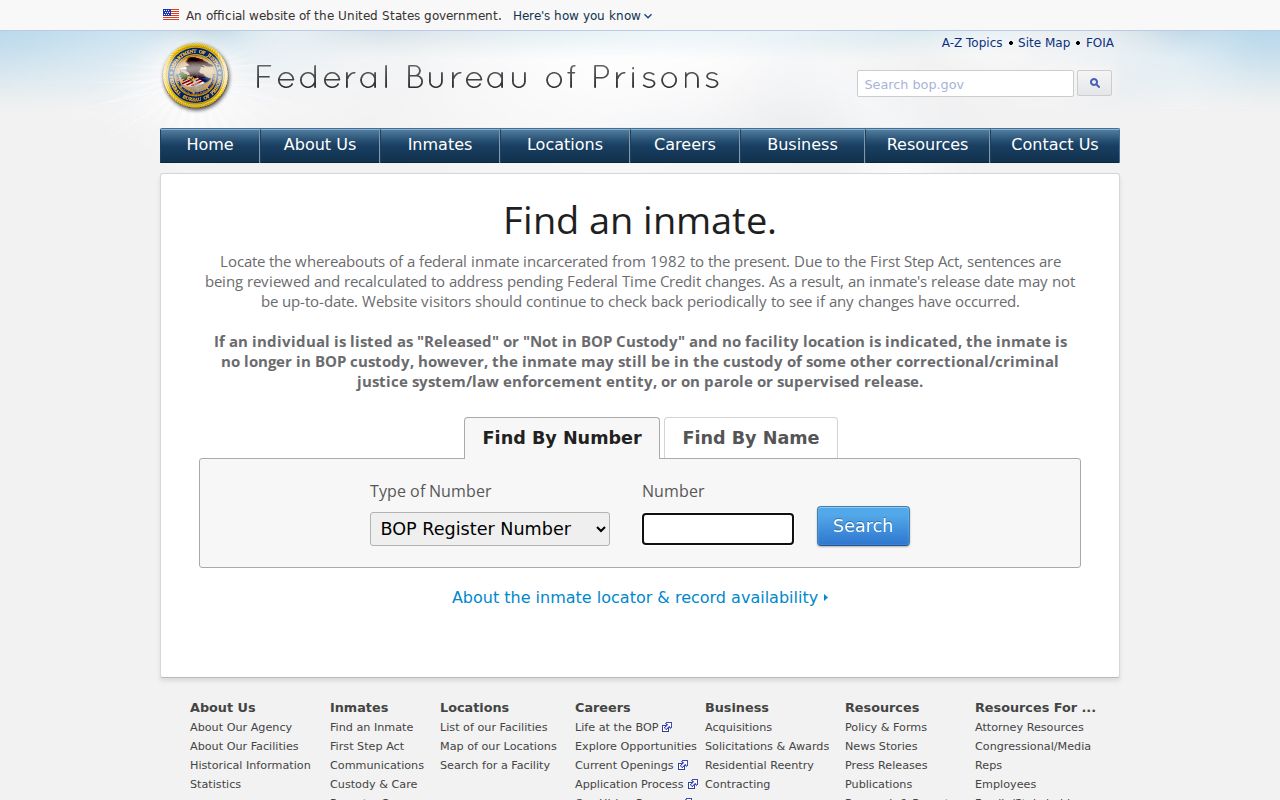
Its results show location and release information, but release dates can change. Federal dockets instead run through PACER and the Northern District of Alabama.
Talladega Criminal Supervision Records
The Alabama Bureau of Pardons and Paroles divides Talladega County between two field offices. The Talladega office at 150 East Renfroe Road serves the north and lists 256-362-4911. The Sylacauga office in Room 211 at 400 North Norton Avenue serves the south and lists 256-249-2597. Both publish weekday business hours, with the Sylacauga office closed at midday.
The Talladega Field Office page identifies the northern supervision contact.
No public statewide probationer name search was verified. The sentencing or revocation docket, correct field office, ADOC fields, and a formal records request answer different parts of a supervision question.
A formal Bureau records request asks for the requester's contact information, a description of the requested material, its intended use, fee acknowledgment, and a signature. The published schedule starts at $20 per hour with a one-hour minimum, plus 50 cents for a physical page and $20 for certification. Electronic copies have no page fee. Estimates of $20 or less are waived, and the agency publishes a ten-business-day acknowledgment target.
Criminal Records by City in Talladega County
City police reports and municipal court files remain local even when a person is booked into a county facility. Talladega, Sylacauga, and Lincoln are the county's three largest incorporated cities in current Census estimates. Each has a distinct record route, so the city of arrest or citation matters.
Talladega Criminal History
14,840 residents · city police, municipal court, and Metro Jail routing
Sylacauga Criminal History
12,055 residents · detailed police records counter and city court
Lincoln Criminal History
8,110 residents · police records, municipal court, and contracted jail service
City files should not be treated as full statewide histories. They add the local police narrative, municipal case, or request method to the broader Talladega County criminal record trail.
Talladega city routes police records through its administrative division and municipal matters through City Hall. Sylacauga publishes a detailed basement records-counter schedule, several copy and media fees, and a city-only check that may omit the court outcome. Lincoln has a dedicated police-records number, a separate municipal court, and contracted county jail service. Those differences are why swapping only a city name into one search routine would miss useful local steps.